Watercolor Exercise: Painting Green Leaves
🎨 Your watercolor challenge: Paint some happy leaves!
Leaves are one of my favorite subjects to practise with because they're simple, playful, and perfect for getting to know your brushes.
Here's what to do:
🍃 Step 1: Choose your color
Pick a color for your leaves, that can be green, but you can also try something different. Think autumn oranges, warm yellows, soft pinks, or whatever takes your fancy! (Of course you can repeat this exercise and use different colors each time..)
🍃 Step 2: Play with your brush
Dip your brush in water, pick up some paint, and practise making different marks on your paper.
Try pressing the brush down and lifting it again. Experiment with thin lines, wider strokes, and little dabs of color.
🍃 Step 3: Turn your brushstrokes into leaves
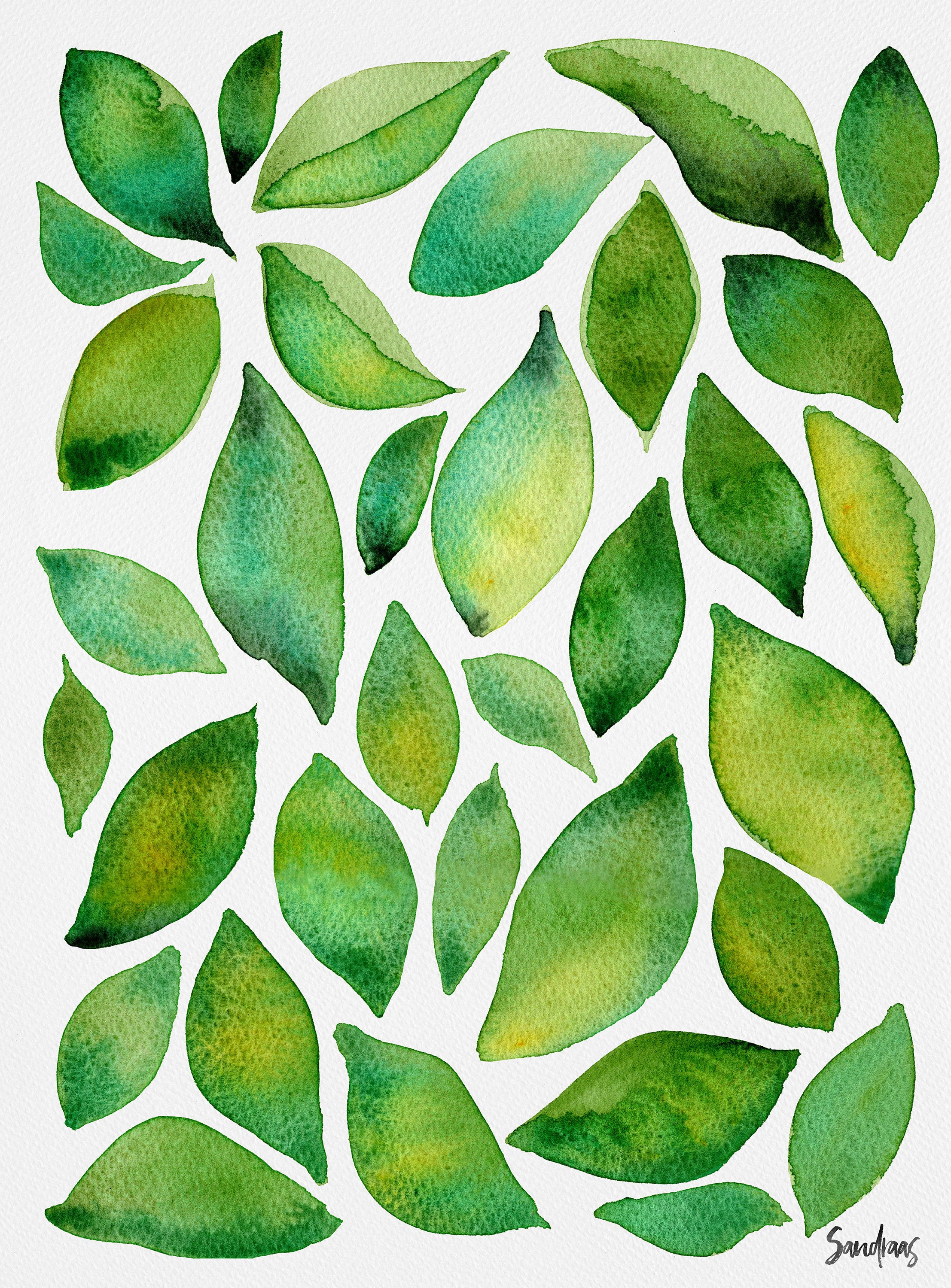
Try making a few simple leaf shapes using the strokes you've just practised. You can make them long and thin, round and chubby, or wonderfully wonky.
Remember, leaves in nature aren't all identical. Yours don't have to be either!
🍃 Step 4: Experiment!
What happens when you add more water? What happens when you use less?
Try dropping a second colour into a damp leaf and watch the pigments mingle together.
There are no mistakes here, just little discoveries. ✨
🍃 Step 5: Paint leaves on branches
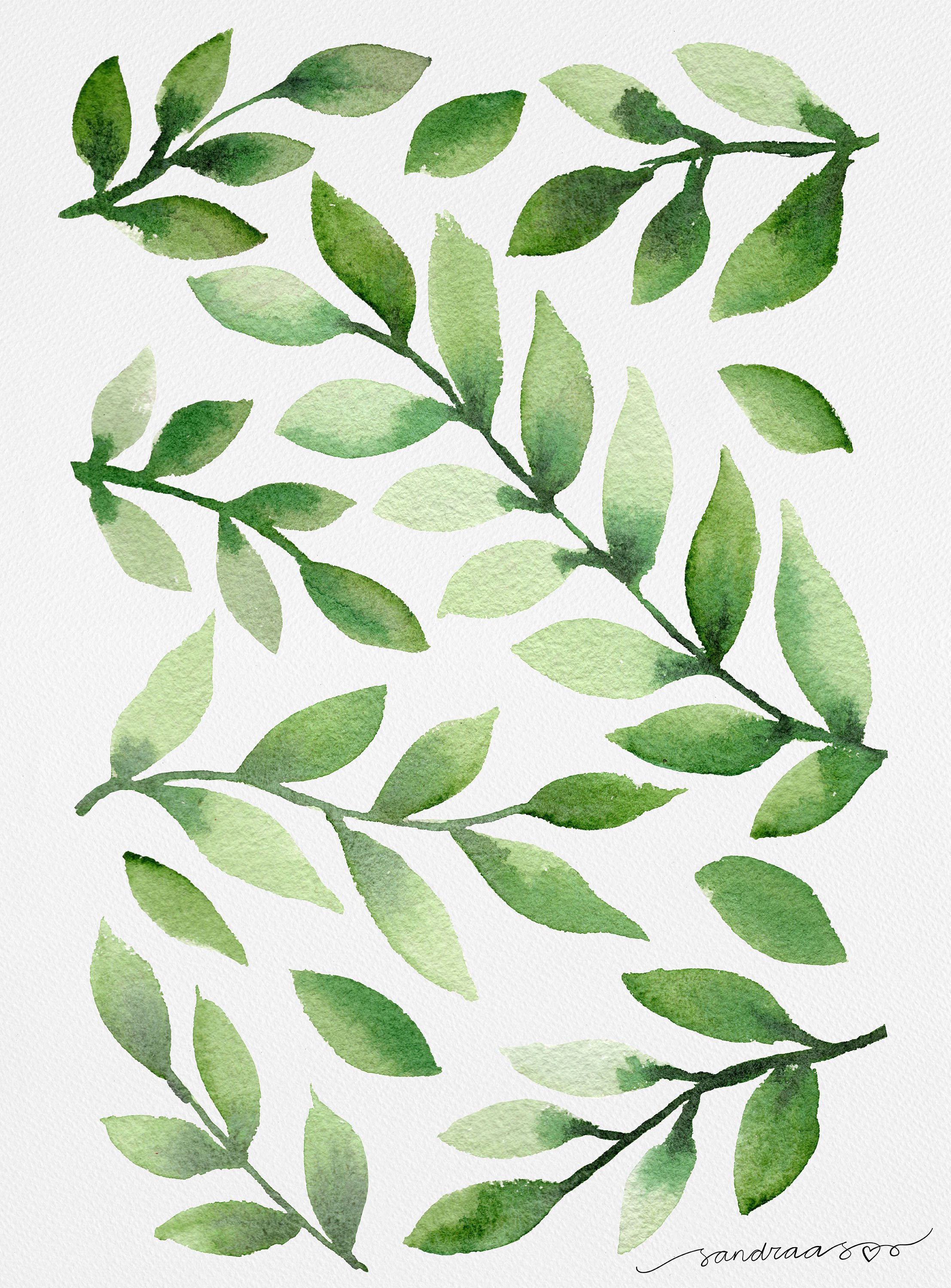
With the tip of your brush, paint a thin line (this is going to be the branch) and start painting the leaves (what you have just practiced) alongside the branch. Experiment here as well: Have lighter washes, add more pigment. Drop in other shades of the same color.
Tip: I personally like to make the branch darker and while I add in a darker color, it blends in beautifully with the still wet leaves.
Watch the Exercise in the video above to paint the leaves on the branch —>
🌷 Want to keep learning with me?
If you're enjoying your watercolor journey and would love a little more guidance, that's exactly why I created the Watercolor Success Roadmap.
It's designed to help you build your watercolor skills step by step, from foundational techniques to sketching and creating your own illustrations.
Instead of wondering what to practise next, you'll have a clearer path to follow as you develop your skills and confidence.